
This blog post has been researched, edited, and approved by John Hanning and Brian Wages. Join our newsletter below.
Frequently Asked Questions
What should property owners review before year-end?
Review property purchases, new construction, renovations, major repairs, equipment additions, fixed asset schedules, depreciation, energy-efficient improvements, and property sales.
Should I review cost segregation before year-end?
It may be worth reviewing if you purchased, built, renovated, expanded, or improved commercial property during the year.
Can renovations affect tax planning?
Yes. Renovation costs can receive different tax treatment depending on the work performed. Some costs may need to be capitalized, while others may qualify as repairs.
Why review fixed assets before year-end?
A fixed asset review can identify assets that may be classified incorrectly, removed or replaced assets still on the books, and depreciation schedules that need attention.

October is a good time for property owners to look back at what changed during the year.
Did you buy a building? Finish construction? Renovate or expand a property? Replace major systems? Sell real estate?
Those decisions may affect depreciation, deductions, fixed asset records, and year-end tax planning.
Waiting until tax filing season can make the review harder. Invoices get buried, project details become harder to remember, and depreciation schedules may already include costs that deserve a second look.
Why October Is a Good Time to Review the Year
By October, most property owners know what major activity happened during the year.
A building may have been purchased. A renovation may be complete. New equipment may have been installed.
That makes this a good time to gather records while the details are still fresh and before year-end tax planning gets rushed.
Did You Purchase or Build Property This Year?
A property purchase or completed construction project should usually trigger a depreciation review.
Commercial properties contain many different types of assets. Cost segregation can help determine whether certain components should be depreciated over shorter periods instead of treating everything as part of the main building.
Property owners may want to gather:
- Closing statements
- Purchase agreements
- Appraisals
- Construction invoices
- Contractor pay applications
- Architectural drawings
- Fixed asset schedules
The earlier those records are organized, the easier the year-end review becomes.
Did You Renovate, Expand, or Improve a Property?
Renovations deserve a closer look too.
A project recorded as one large “building improvement” may include flooring, lighting, electrical work, plumbing, HVAC, equipment connections, parking improvements, and structural changes.
Those costs may not all receive the same tax treatment.
A review can help determine what should remain with the building, what may qualify for shorter depreciation, and whether any costs should be considered under repair versus capitalization rules.
Review the Fixed Asset Schedule
Property owners should also review what is already on the depreciation schedule.
Ask:
- Are assets still listed that were removed or replaced?
- Were old HVAC systems, roofs, lighting, or other components retired?
- Were new improvements grouped into one large asset?
- Were equipment and building improvements classified correctly?
A fixed asset review can uncover issues before another year of depreciation is added.
Review Cost Segregation, Bonus Depreciation, and Energy Improvements
Property owners who purchased, built, or improved property should also consider how cost segregation fits with broader depreciation planning.
Certain shorter-life assets identified through cost segregation may qualify for accelerated depreciation depending on the applicable rules.
Energy-efficient projects may also deserve review. Projects involving lighting, HVAC, hot water systems, or building envelope improvements may raise Section 179D questions.
For 2026 projects, timing is especially important because the current 179D rules include a June 30, 2026 construction-start deadline for new qualifying projects.
Did You Sell a Property This Year?
A property sale should also trigger a review.
Make sure your tax team has the correct cost basis, depreciation history, improvement records, and information from prior cost segregation studies.
If building components were removed, replaced, or separately classified during ownership, those records may matter when the property is sold.
What Documents Should Property Owners Gather?
Before year-end, consider gathering:
- Purchase and closing documents
- Construction and renovation invoices
- Contractor pay applications
- Architectural and engineering drawings
- Fixed asset and depreciation schedules
- Records of assets removed or replaced
- Tenant improvement records
- Equipment invoices
- Energy project documentation
- Sale and disposition records
You do not need every tax answer in October however you do want the records available when your tax team needs them.
Qualified Production Property May Create Another Depreciation Opportunity
Property owners with manufacturing or production facilities should also review the new Qualified Production Property rules under IRC §168(n).
QPP may allow up to 100% depreciation on qualifying portions of certain nonresidential real property used directly in manufacturing, production, refining, or other qualifying production activities.
This is different from traditional cost segregation asset classes. Cost segregation identifies shorter-life components within a building, while QPP may allow accelerated depreciation on qualifying portions of the building itself.
For businesses building, acquiring, or improving production facilities, the two strategies should be reviewed together.
How Specialty Tax Group Helps Property Owners
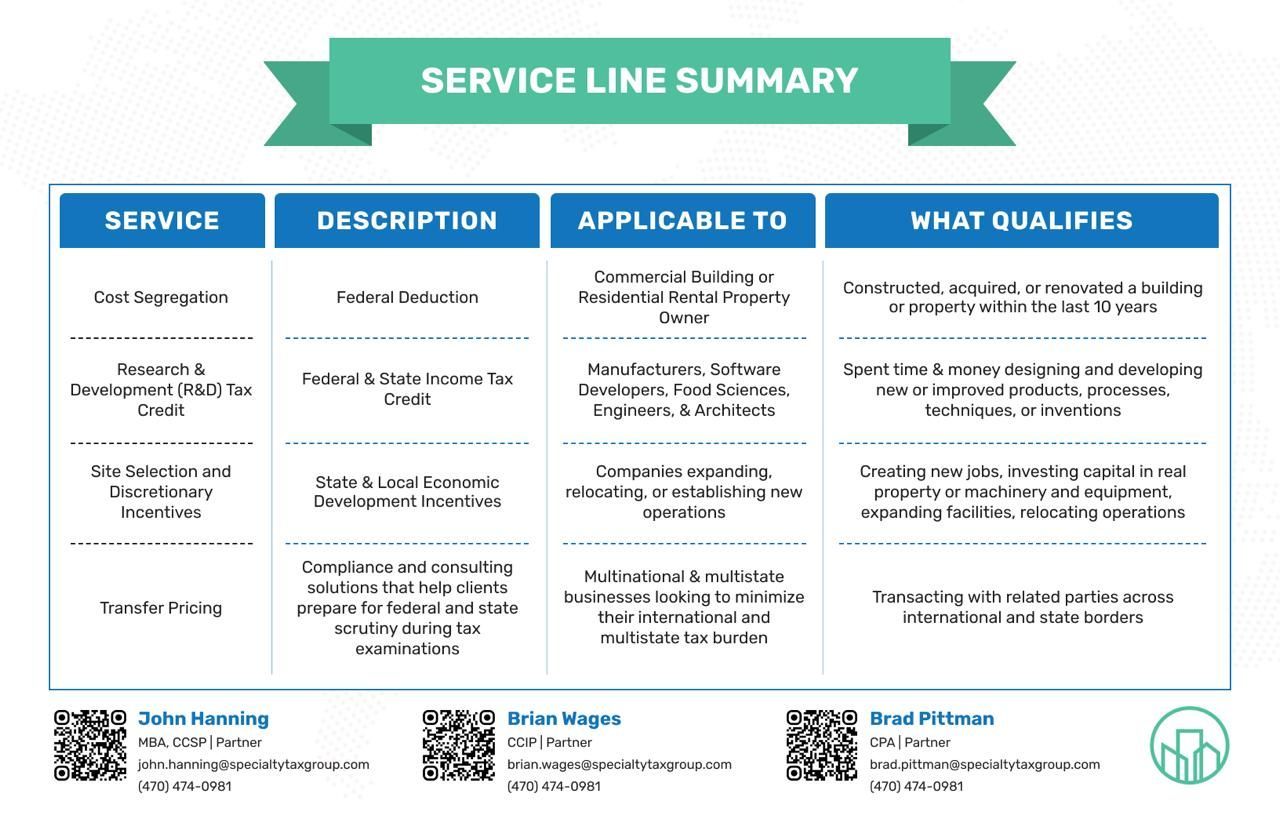
Specialty Tax Group works with property owners and their tax advisors on cost segregation, fixed asset reviews, tangible property and repair reviews, depreciation planning, accounting methods, and energy-efficient building incentives.
The starting question is simple:
What changed with the property this year?
From there, STG can help determine which projects, assets, and records deserve a closer review.
Final Takeaway
October is a good time for property owners to review the year before tax planning gets busy.
If you purchased, built, renovated, expanded, improved, or sold property in 2026, review those transactions now.
Look at the depreciation schedule. Gather project records. Identify assets that were added or removed. Determine whether cost segregation, bonus depreciation, repair treatment, fixed asset issues, or energy incentives should be discussed with your tax team.
The goal is to find those questions before the return is already being prepared.
2026 Tax Guide