
This blog post has been researched, edited, and approved by John Hanning and Brian Wages. Join our newsletter below.
Cost Segregation in 2025 Tax Planning Frequently Asked Questions
Can you do a cost segregation study on an older building?
Yes. A retroactive cost segregation study can be completed on property placed in service in prior years, allowing you to claim missed depreciation in the current year using Form 3115 without amending past returns.
How long does a cost segregation study take in 2025?
Most studies take 4 to 8 weeks, depending on the size of the property and how quickly construction documents or financial records are provided.
What is the minimum property value for cost segregation to make sense?
There’s no strict minimum, but properties under $500,000 often produce limited benefit. Many professionals recommend evaluating buildings valued at $1 million or more for meaningful savings.
Does cost segregation affect capital gains when you sell?
Accelerated depreciation may increase depreciation recapture when the property is sold, but the upfront tax savings and improved cash flow often outweigh the future impact.
Can manufacturers combine cost segregation with QPP identification?
Yes. Manufacturing facilities often benefit from both cost segregation and
Qualified Production Property.

If you own commercial property, you’ve probably heard the term cost segregation tossed around in tax conversations.
Most business owners know it “saves money,” but fewer understand how it actually works, or why 2025 is a year where timing matters more than ever.
This guide keeps it simple. What it is. How it works. Who qualifies. And whether it makes sense for your 2025 filing.
What Is Cost Segregation?
Cost segregation is a tax strategy that allows you to accelerate depreciation on specific components of a commercial building.
Normally, commercial property is depreciated over 39 years. Cost segregation breaks out certain parts, like specialized electrical, plumbing, flooring, and site improvements, and reclassifies them into shorter recovery periods (5, 7, or 15 years).
You’re not increasing total depreciation.
You’re changing
whenyou take it. That shift can significantly improve short-term cash flow.
Why The IRS Allows It
This isn’t a loophole. It’s based on IRS asset classification rules and long-standing tax guidance.
Not every part of a building serves the same purpose. Some components qualify as tangible personal property or land improvements rather than structural elements.
A properly prepared engineering-based study documents and supports those classifications.
When done correctly, it’s a recognized cost recovery strategy.
A Real World Example
Let’s say you purchase a $2 million commercial property.
Without cost segregation:
- About $51,000 per year in depreciation over 39 years.
With cost segregation:
- 25–35% may qualify for shorter depreciation lives.
- That portion is deducted much sooner.
Same total write-off, just front-loaded.
That timing difference is what creates the tax impact.
How Cost Segregation Works Step-by-Step
Step 1: Property Review & Feasibility Analysis
A preliminary review looks at:
- Property value
- Type of building
- Date placed in service
- Projected taxable income
The goal is simple: Does the projected savings justify the study cost?
Step 2: Engineering-Based Study
If it makes sense, an engineering team analyzes the property.
They:
- Review construction details
- Identify qualifying 5-, 7-, and 15-year assets
- Document classifications under IRS guidelines
Documentation is critical. A well-supported study significantly reduces audit risk.
Step 3: Tax Filing Implementation
For new properties, accelerated depreciation applies immediately.
For older properties, Form 3115 (Change in Accounting Method) allows you to claim “catch-up” depreciation in the current year, without amending prior returns.
That catch-up deduction can be substantial.
Who Qualifies for Cost Segregation?
Eligible Property Types
Common qualifying properties include:
- Office buildings
- Manufacturing facilities
- Warehouses
- Medical offices
- Retail spaces
- Industrial properties
- Certain short-term rentals
Manufacturing facilities often see strong results due to specialized systems.
Ownership Requirements
You generally must own the property. This includes:
- Newly constructed buildings
- Recently purchased commercial property
- Major renovations or expansions
Leasing without improvements typically does not qualify.
Income Considerations
Accelerated depreciation is most valuable when you have taxable income to offset.
If income is limited, passive activity rules may affect how quickly deductions are usable. This is why cost segregation should be evaluated within broader 2025 tax planning, not in isolation.
When Should a Cost Segregation Study Be Done?
Immediately After Purchase or Construction
The cleanest timing is the year the building is placed in service. This maximizes early-year depreciation.
Retroactive Studies (Look-Back Rule)
If you bought property years ago, it’s not too late.
A retroactive study allows you to file Form 3115 and claim missed depreciation as a one-time catch-up deduction.
No amended returns required.
Before Filing Your 2025 Return
Evaluating the strategy before filing preserves flexibility. Once returns are finalized, options narrow.
Proactive planning matters.
How Much Can Cost Segregation Realistically Save?
Typical Reclassification Percentages
On average, 15–40% of a commercial building’s cost may qualify for shorter recovery periods.
The exact percentage depends on property type and construction details.
Sample Savings Scenario
Consider a $3 million industrial facility.
If 30% ($900,000) qualifies for accelerated depreciation, the first-year deduction could increase dramatically compared to standard 39-year depreciation.
At typical tax rates, that may translate into a six-figure cash flow impact in year one.
This is about accelerating deductions, not creating new ones.
Is Cost Segregation Worth It?
It often makes sense when:
- Property value is substantial
- The business is profitable
- The hold period is long-term
- Projected savings outweigh study cost
It may not make sense if the income is minimal or the property will be sold soon. Running the numbers is essential.
Cost Segregation Rules for 2025: What’s Changed?
Bonus Depreciation Phase-Down Schedule
Bonus depreciation percentages are lower than in prior years. Projections must reflect current rules rather than outdated assumptions.
Interaction With Section 179
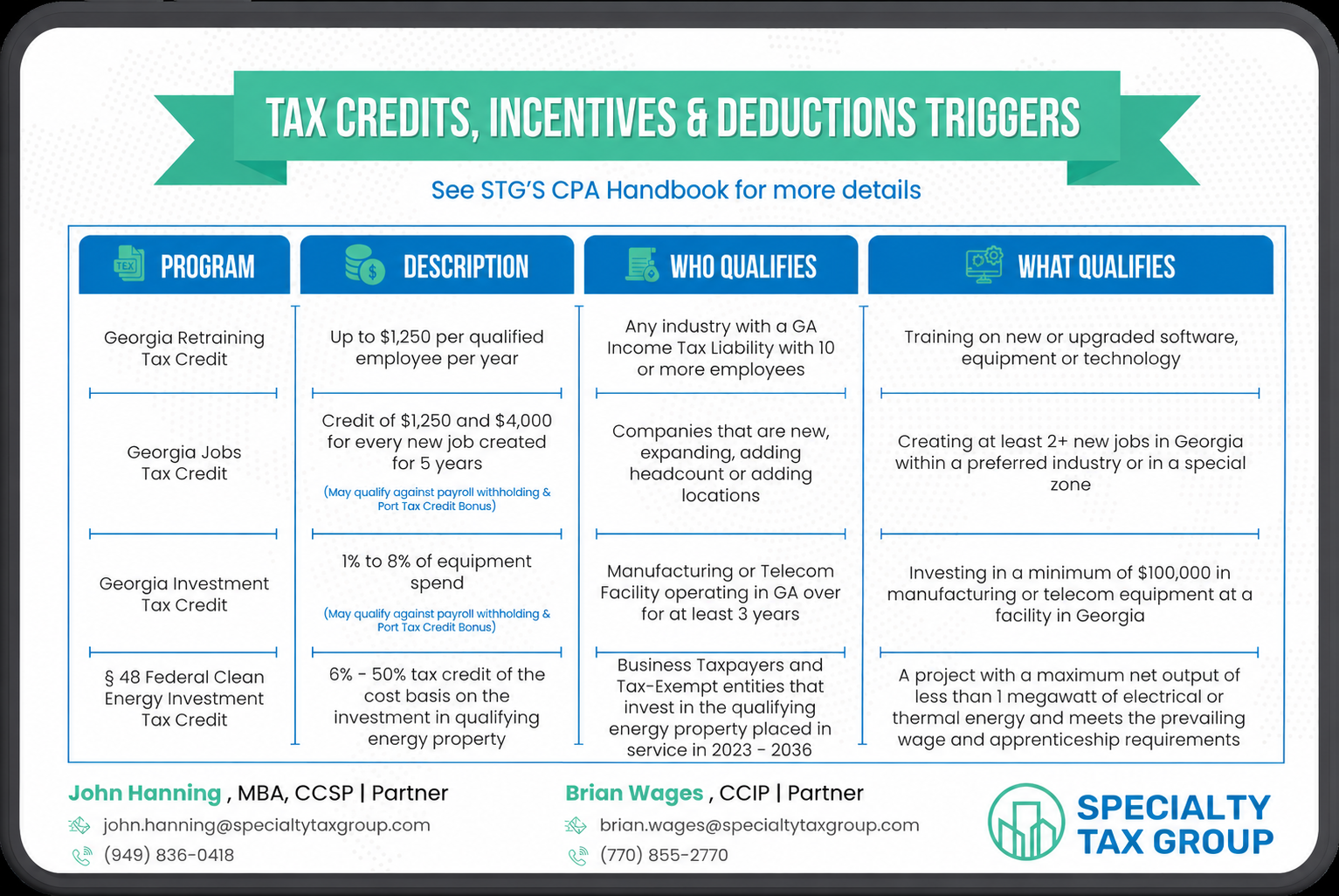
Cost segregation can identify assets that qualify for Section 179 or qualified improvement property treatment.
When coordinated properly, these strategies complement each other.
How QPP Fits Into a Broader Manufacturing Tax Strategy
QPP vs. Other Manufacturing Incentives
QPP often intersects with other manufacturing-related incentives, but it serves a distinct role. Understanding how it fits into the larger picture helps ensure nothing is overlooked or misapplied.
Why Proper Classification Matters Long-Term
Correct classification affects more than one tax year. It influences depreciation, audit risk, and long-term planning. Getting it right upfront protects both opportunity and credibility.
IRS Compliance & Audit Risk
Cost segregation itself does not trigger audits. Poor documentation does. A well-prepared engineering-based study significantly reduces risk.
Common Misconceptions About Cost Segregation
“It’s Only for Large Corporations”
Many mid-sized businesses benefit, especially those with properties over $1 million.
“It Triggers an Audit”
The IRS recognizes cost segregation as legitimate. Risk comes from unsupported allocations.
“It Only Helps If I’m Selling Soon”
The strategy is about accelerating deductions — not selling property.
“It’s Too Late If I Bought Years Ago”
Retroactive studies exist specifically for this reason.
How to Decide if Cost Segregation Is Right for Your 2025 Filing
Ask:
- What will taxable income look like in 2025?
- How long will I hold the property?
- Have I made major improvements?
- Do projected savings exceed study costs?
Cost segregation works best as part of coordinated tax planning, alongside other depreciation and incentive strategies
Strategic Depreciation Is a 2025 Planning Tool
Cost segregation isn’t about chasing aggressive deductions.
It’s about understanding how depreciation rules work and using them intentionally.
In 2025, timing and planning matter more than ever.
If you own commercial property and haven’t evaluated accelerated depreciation, it may be worth reviewing the numbers before filing, as clarity now can create flexibility later.
2024 Tax Guide