
This blog post has been researched, edited, and approved by John Hanning and Brian Wages. Join our newsletter below.
Frequently Asked Questions
What are discretionary incentives?
Discretionary incentives are economic development incentives that may be offered to businesses that create jobs, invest money, expand facilities, relocate operations, or start new projects.
How are discretionary incentives different from tax credits?
Tax credits usually follow set rules. If a business qualifies, it may claim the credit.
Discretionary incentives often require an application, review, approval, or negotiation with state or local economic development groups.
When should a business explore discretionary incentives?
A business should usually review discretionary incentives before finalizing a major decision, such as expansion, relocation, hiring, or facility investment.
Why do businesses miss discretionary incentives?
Many businesses only look for incentives during tax season. Discretionary incentives often need to be discussed earlier, while the project is still being planned.

Tax credits are usually the first thing businesses think about when they hear the word “incentives.”
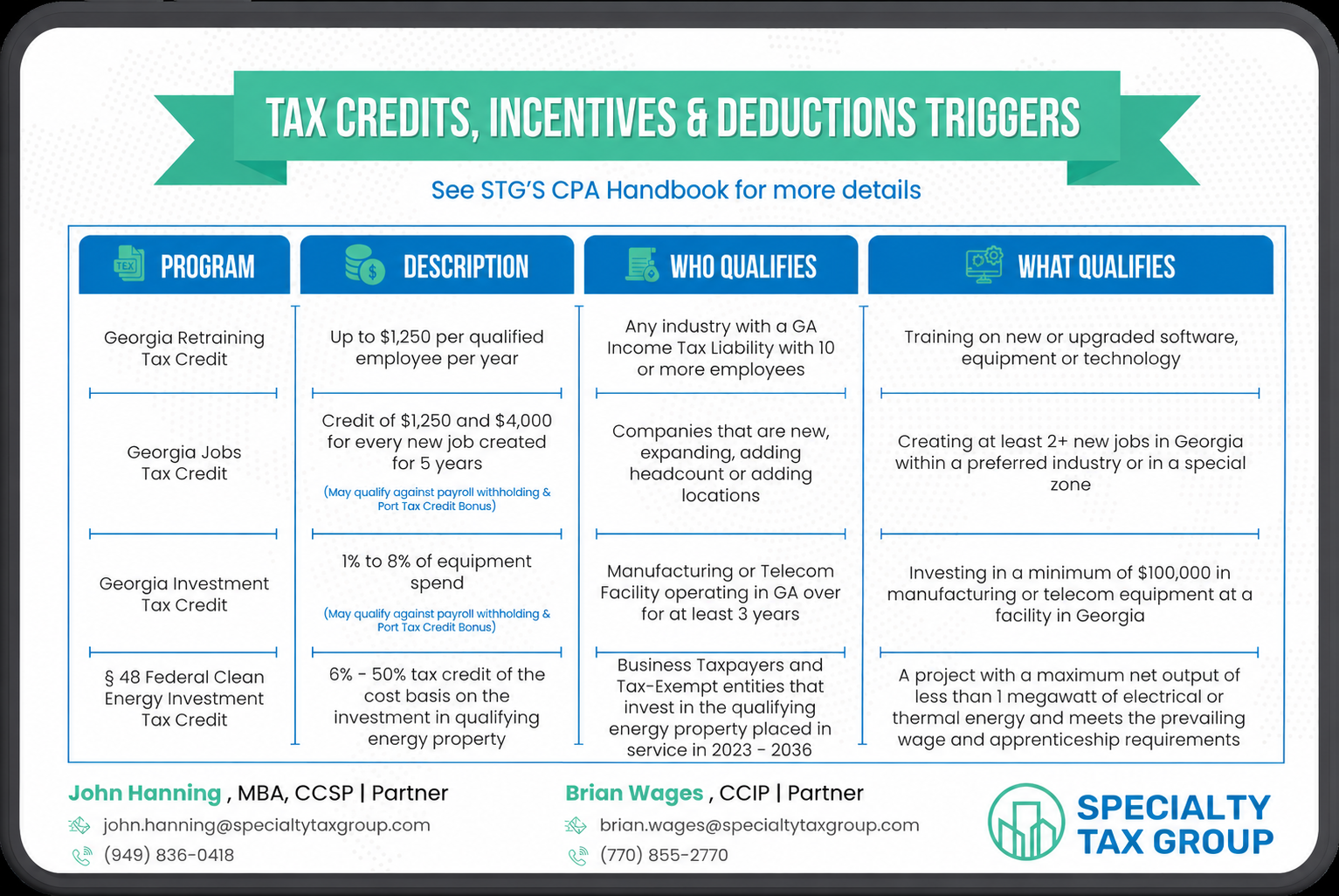
They may already know that certain activities, like research, hiring, training, or investing in new equipment, can create tax savings if the company qualifies.
But there is another side of the incentive conversation that often gets missed: discretionary incentives.
These opportunities can work very differently from traditional tax credits. Instead of being reviewed after the activity has already happened, discretionary incentives often need to be explored while a business is still planning a major decision, such as expanding, relocating, hiring, or investing in a facility.
That timing matters.
If a company waits until the project is already finalized, some incentive opportunities may no longer be available. This is why discretionary incentives should be part of the planning conversation early, not treated as something to look into later.
What Are Discretionary Incentives?
Discretionary incentives are incentives that state or local governments may offer to encourage business growth in a specific location.
For example, a company may be planning to expand a facility, add employees, buy equipment, or move operations to a new city or state. That project may create jobs, increase investment, or bring value to the local economy.
Because of that, an economic development group may consider offering support.
Discretionary incentives may include:
- Cash grants
- Property tax abatements
- Sales tax relief
- Workforce training support
- Infrastructure assistance
- Forgivable loans
- Job creation incentives
These incentives are usually not automatic. A business may need to apply, share details about the project, and receive approval.
They are also usually tied to commitments. A company may need to create a certain number of jobs, invest a certain amount of money, or stay in a location for a set period of time.
How Are Tax Credits Different?
Tax credits are usually created by law. They have defined rules, requirements, and filing steps.
If a business meets the rules, it may be able to claim the credit.
Common examples include:
- R&D tax credits
- Jobs tax credits
- Training credits
- Investment tax credits
- State tax credits
With tax credits, the main question is:
Did the business qualify under the rules?
That means the focus is usually on documentation, calculations, and filing correctly.
Discretionary Incentives vs. Tax Credits
The simple difference is this:
Tax credits are usually rule-based. Discretionary incentives are usually project-based.
| Category | Tax Credits | Discretionary Incentives |
|---|---|---|
| How they work | Based on set rules | Based on project review or approval |
| Main question | Did the business qualify? | Is the project valuable enough to support? |
| Timing | Often reviewed after the activity happens | Usually reviewed before a decision is final |
| Process | Documentation and filing recovery | Application, review, and sometimes negotiation |
| Examples | R&D credits, jobs credits, training credits | Grants, abatements, training funds, and infrastructure support |
| Common mistake | Missing the credit or lacking documentation | Waiting until the decision is already made |
Both can be valuable, but they do not work the same way.
A company may be claiming tax credits correctly and still miss discretionary incentives because no one reviewed the growth project early enough.
Why Timing Matters
Timing is one of the most important parts of discretionary incentives.
Some tax credits can be reviewed after the activity has already happened.
Discretionary incentives often need to be reviewed before the company commits to the project.
That means before:
- A lease is signed
- A location is selected
- Construction begins
- Hiring starts
- Equipment is purchased
- The expansion is announced
Once the decision is made, some opportunities may no longer be available.
Discretionary incentives are often designed to influence where and how a business grows. If the company has already made the decision, the state or local community may have less reason to offer support.
When Should a Business Explore Discretionary Incentives?
A business should consider discretionary incentives when planning:
- Facility expansion
- Relocation
- Job creation
- Workforce growth or training
- Capital investment
- New operations
- Major facility decisions
The key is to ask early.
Instead of only asking, “Can we claim a tax credit?” businesses should also ask, “Could this project qualify for incentive support before we finalize it?”
Why This Should Be Part of a Larger Incentive Strategy
Many businesses only think about incentives during tax season.
That can work for some tax credits, but it can miss other opportunities.
A stronger strategy looks at both:
Known tax credits the business may be able to claim, and discretionary incentives that may need to be reviewed before a major decision is finalized.
Discretionary incentives may not show up automatically on a tax return. They may come through state or local programs, workforce support, property tax agreements, grants, or project-based incentive packages.
That is why growing companies should review incentives early.
Final Takeaway
Tax credits and discretionary incentives can both help businesses reduce costs, but they work differently.
Tax credits are usually based on set rules.
Discretionary incentives are usually based on project impact, timing, approval, and planning.
If your business is preparing to expand, relocate, hire, invest, or launch new operations, it may be worth reviewing discretionary incentives before the decision is finalized.
Specialty Tax Group
can help evaluate whether discretionary incentives, tax credits, or other opportunities may apply before important business decisions are locked in.
2024 Tax Guide